An office move in London is really two jobs wearing one coat. There's the office removals job — getting desks, chairs, monitors and archive boxes from one address to another without losing a working day — and there's the office clearance job: what happens to the tired furniture, the dead printers and the tangle of old cables you never want to see again.
Get the first part wrong and your team loses productivity. Get the second part wrong and you can face an unlimited fine, because business waste in England carries a legal duty of care that follows you even after the van drives away. This guide covers both sides for a 2026 London relocation — the plan, the logistics, and the compliant, low-drama way to clear the old kit.
Whether you're a five-person studio in Shoreditch or a 60-desk office in the City, a flexible man-and-van team can handle a surprising amount of it — the move, the clearance and the awkward single-item runs in between.
How much do office removals cost in London in 2026?
Office moves are usually priced either by the hour (for smaller jobs) or as a fixed relocation quote (for full offices). As a benchmark, a two-person crew with a large van costs from around £95 per hour in London, and a Luton van team from about £120 per hour. Here's what a typical relocation works out at:
| Office Size | Typical Move Cost | Crew / Van |
|---|---|---|
| Micro office (up to 10 staff) | £400–£900 | 2 men + LWB/Luton |
| Small office (10–20 staff) | £600–£1,800 | 2–3 men + Luton |
| Mid-size (30–60 desks) | £2,000–£6,000 | Multi-van, multi-trip |
| Office clearance (per Luton load) | from £120 | 2 men, load-and-go |
What pushes the price up
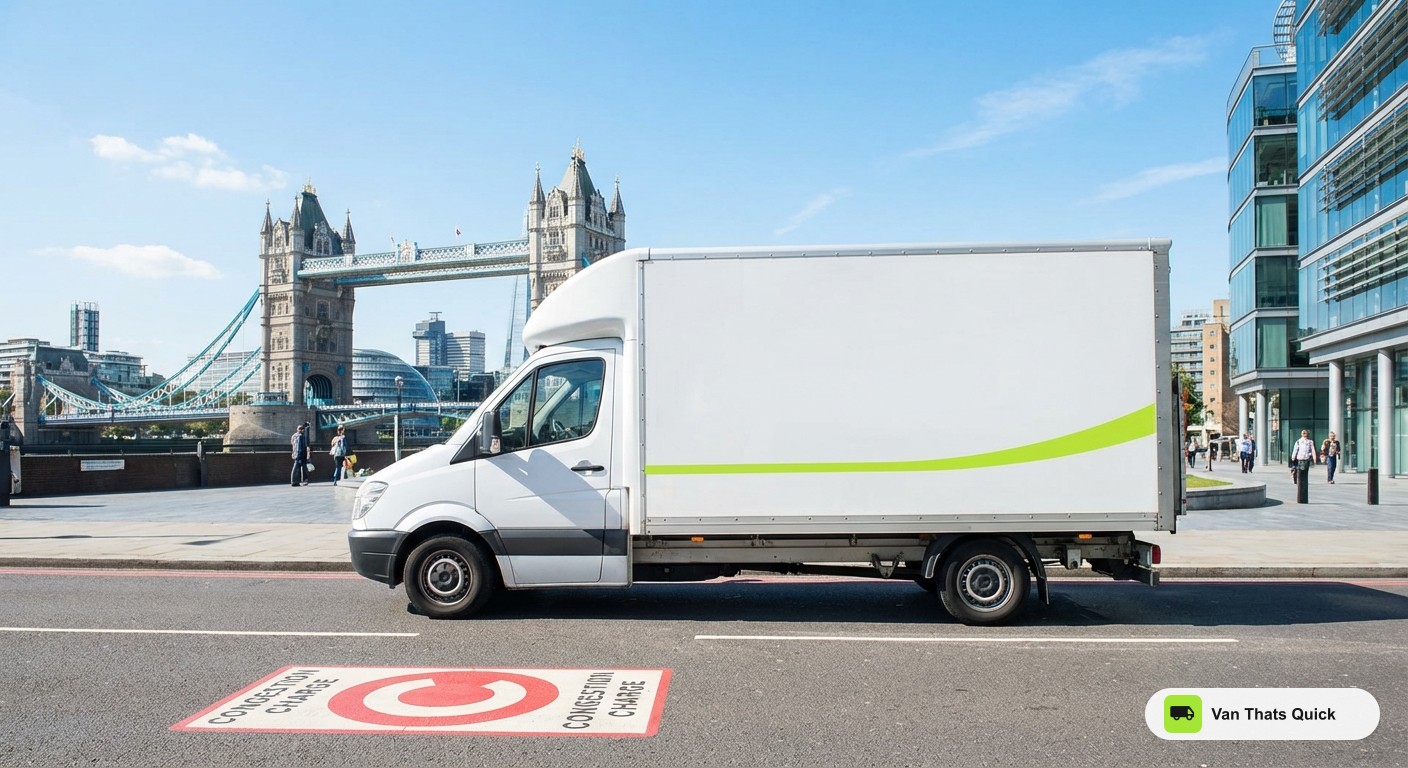
Central London postcodes, stairs with no goods lift, out-of-hours timing, and the volume of clearance you tack on. The Congestion Charge rose to £18/day on 2 January 2026, so timing matters.
What keeps it down
Labelled boxes ready on move day, IT decommissioned in advance, and combining the removal with the clearance run so you pay for one visit rather than two.
These are typical London ranges, not a fixed quote. For an exact figure, our office removals team will price your specific building and inventory.
How far ahead should you plan an office relocation?
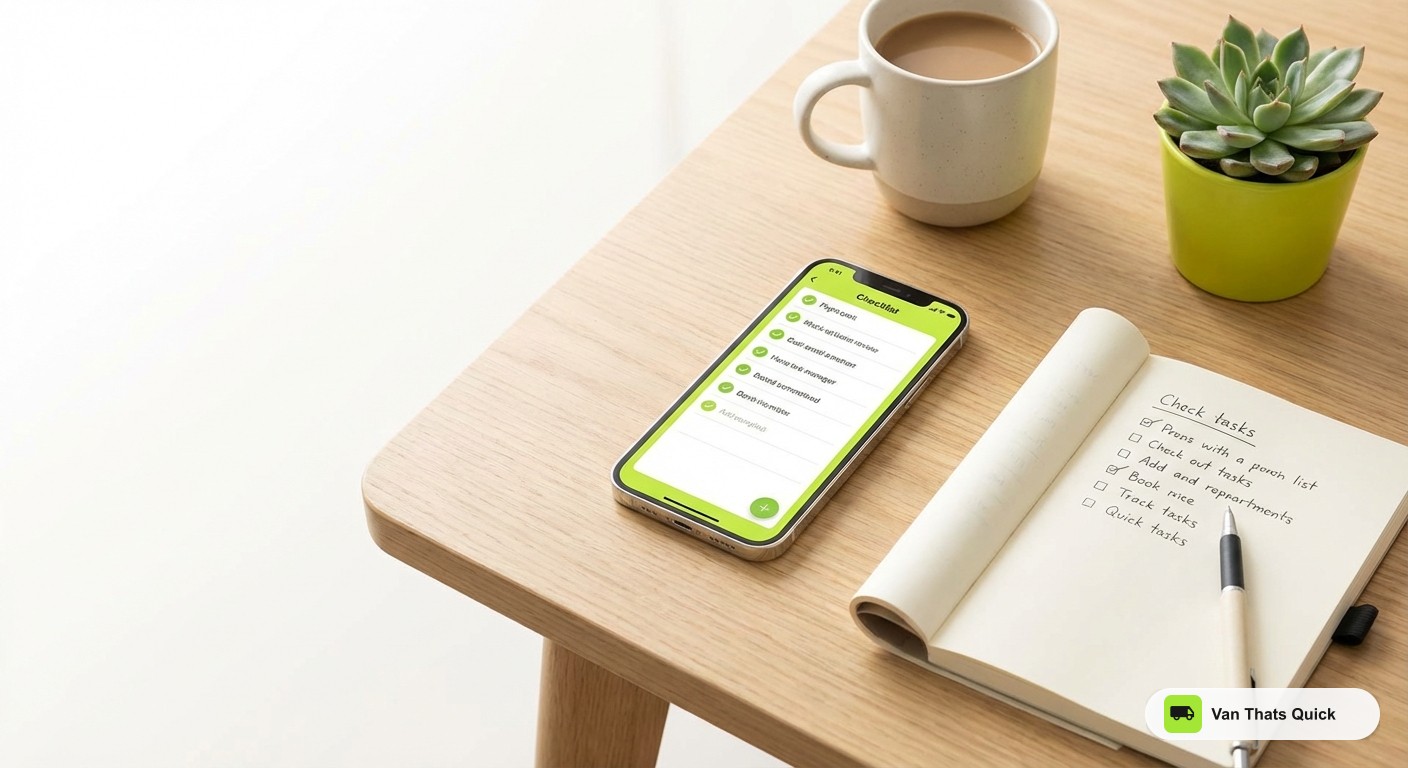
The single biggest predictor of a smooth office relocation is lead time. As a rule of thumb, start planning 8–12 weeks ahead for a small office and 3–6 months for anything over 30 desks. Here's a working timeline:
wk
Confirm the new lease & audit what you own
Walk the new floor, check goods-lift access and loading-bay rules, and inventory every desk, chair, cabinet and device. Decide now what moves, what gets replaced, and what goes to clearance.
wk
Book the movers & the clearance
Lock in your office removals date and, if you're downsizing, book the clearance for the same window. Notify building management at both ends about lift bookings and parking.
wk
Plan IT and comms
Arrange broadband and phone lines at the new site, back up everything, and schedule your IT team or provider to decommission and reconnect. Order crates and cable bags.
wk
Label, pack and brief the team
Colour-code boxes by department and destination desk. Send staff a one-page move brief. Confirm the running order with your crew so central London parking windows aren't wasted.
Should you move out of hours or at the weekend?
For most London offices, the answer is yes. An evening or weekend move means the business loses zero trading hours — staff leave on Friday from the old address and log in Monday at the new one. It also sidesteps the worst of the traffic and the Congestion Charge window.
The Congestion Charge applies Monday–Friday 7am–6pm and 12pm–6pm at weekends and on bank holidays, at £18 per day from January 2026. A move that runs into the small hours of a weekday, or across a Sunday morning, can dodge that charge entirely. The ULEZ charge of £12.50/day still applies to non-compliant vehicles at any time — all our vans are ULEZ compliant, so that's one line item you never see. For the finer points of moving through the charging zone, see our London congestion zone moving tips.
The out-of-hours trade-off
Evening and weekend crews may carry a modest premium, but the productivity you protect usually dwarfs it. Many City and Canary Wharf buildings only permit large moves outside 9–5 anyway, so check your goods-lift booking rules early. We also run evening moves and weekend moves as standard.
How do you handle IT and desk logistics?
IT is where office moves go wrong, because a monitor that arrives fine but a server that doesn't come back online costs you the day. Keep it simple:
- Back up everything before anything is unplugged. Assume a device could be dropped and plan so it wouldn't matter if it were.
- Bag and label cables per desk. One freezer bag per workstation with monitor, dock and power leads saves hours of "which cable is this?" at the far end.
- Photograph the back of complex setups (servers, comms cabinets, dual-monitor rigs) so reconnection is a picture-match, not a guess.
- Flat-pack the desks you can. Dismantled desks and pedestals load faster and travel safer. Our crew can help with furniture assembly and reassembly at the new office.
- Keep a "day-one" box per team — chargers, a kettle's worth of essentials, and the kit people need to work the moment they sit down.
For urgent bits that can't wait for the main move — a signed contract, a demo laptop, a box of samples for a client meeting — a dedicated courier services run or same day courier keeps the business moving while the office is in transit. We also handle ongoing commercial deliveries once you're settled in.
What do you do with old office furniture?
Most offices downsize their furniture at least a little when they move — hybrid working means fewer permanent desks. That leaves a pile of chairs, desks, pedestals and meeting tables that won't fit the new floor. You have four sensible routes, roughly in order of preference:
1. Reuse and donate
Serviceable office furniture is exactly what reuse charities want. The Reuse Network — around 120 member charities across the UK — redistributes good-quality furniture to low-income households, and many will collect. Startups, schools and community projects often take desks and chairs for free.
2. Resell
Branded ergonomic chairs and height-adjustable desks have a healthy second-hand market. List them, and a man-and-van can handle the buyer collections so you're not tied up managing pickups.
3. Recycle what's broken
Damaged furniture should be recycled where possible rather than binned. A load-and-go clearance service separates recyclable materials and takes the rest to a licensed transfer station.
4. Book a clearance for the rest
For everything that can't be reused, an office clearance or rubbish removal run clears the floor in one visit — priced by the volume that goes in the van, with all the labour and lifting included.
The advantage of a man-and-van clearance over a skip is that nothing sits on the pavement blocking the loading bay, there's no permit to arrange, and you only pay for the space your waste actually fills. It's the flexible middle ground between a single-item collection and a full skip hire.
What are the WEEE rules for old office electronics?
Old monitors, PCs, printers, servers, phones and even the microwave in the kitchen are Waste Electrical and Electronic Equipment (WEEE), governed by the WEEE Regulations 2013 (amended in 2025). The rule that catches businesses out is simple and important:
You cannot bin business electronics
If your business uses electronics — office computers, a staff microwave, a card machine — you're an "end user" in law. You must not put broken electricals in general commercial waste. E-waste has to be separated and passed to a licensed waste carrier for recycling or recovery, and you should keep evidence (a duty-of-care / WEEE note) proving you disposed of it compliantly. Serious breaches can carry unlimited fines.
Two practical tips for a move:
- Wipe data first. Old drives should be securely wiped or physically destroyed before they leave the building — a GDPR obligation, not just good housekeeping.
- Ask about like-for-like takeback. If you're buying new equipment, the retailer that sells electricals to end users must offer a free like-for-like takeback of the old item — worth asking before you pay to dispose of it separately.
Who is responsible if your office waste is fly-tipped?
You are — potentially. Under section 34 of the Environmental Protection Act 1990, every business has a legal duty of care for its waste. Unlike household waste, business waste requires a written waste transfer note for every transfer, and you must only pass waste to a properly registered carrier.
If your old desks and monitors are later found fly-tipped in a lane in Essex, the trail can lead back to your company — and fly-tipping carries unlimited fines on prosecution. "A bloke with a van took it for cash" is not a defence. That's why checking who is taking your waste, and keeping the paperwork, matters as much as the move itself.
How we keep you covered
Before booking a waste collection: ask us to identify the registered carrier handling the job and provide the registration details. Verify those details on the Environment Agency public register before handing over any waste.
Before booking: ask us to identify the registered carrier handling the collection and verify the registration on the Environment Agency public register.One team for the move and the clearance
Based in Uxbridge and serving every London borough, we handle office removals, out-of-hours moves, single-item and same-day runs, and the clearance of old furniture and electronics — all with one point of contact. Pay for the van space and labour you use, nothing you don't.
Frequently Asked Questions
How much do office removals cost in London?
A small London office relocation of 10–20 staff typically costs £600–£1,800, with hourly man-and-van office moves at £95 per hour including a two-person crew. Larger 30–60 desk moves run £2,000–£6,000+. Office clearance is priced separately, from £195 per Luton load.
How long does it take to plan an office move?
Allow 8–12 weeks for a small office and 3–6 months for anything over 30 desks. The most common cause of a chaotic move is booking the crew and the IT changeover too late.
Can you move an office outside working hours?
Yes. Evening, overnight and weekend office moves protect your trading hours and can avoid the £18/day Congestion Charge window. Many City buildings only allow large moves out of hours anyway, so check your goods-lift rules early.
Can I throw old office computers in the general waste?
No. Under the WEEE Regulations, business electricals must be separated and passed to a licensed carrier for recycling — never put in general commercial waste. Wipe data securely first, and keep a disposal note as evidence.
What can I do with old office furniture instead of dumping it?
Donate usable desks and chairs through the Reuse Network or to local charities and startups, resell branded items, recycle what's broken, and book a clearance for the rest. It's cheaper and greener than a skip.
Am I liable if my office waste gets fly-tipped?
Yes, potentially. Businesses have a duty of care under section 34 of the Environmental Protection Act 1990, must use a registered carrier, and must keep a waste transfer note. Fly-tipping traced back to your business carries unlimited fines, so always check who is taking your waste.
Do you cover the whole of London?
Yes. We're based in Uxbridge and cover every London borough, including Central London, the City of London and West London, plus Hayes, Harrow, Ealing and Reading.
Planning an office move?
Tell us your inventory and timeline and we'll give you an honest, all-inclusive quote for the move and the clearance. No hidden fees.