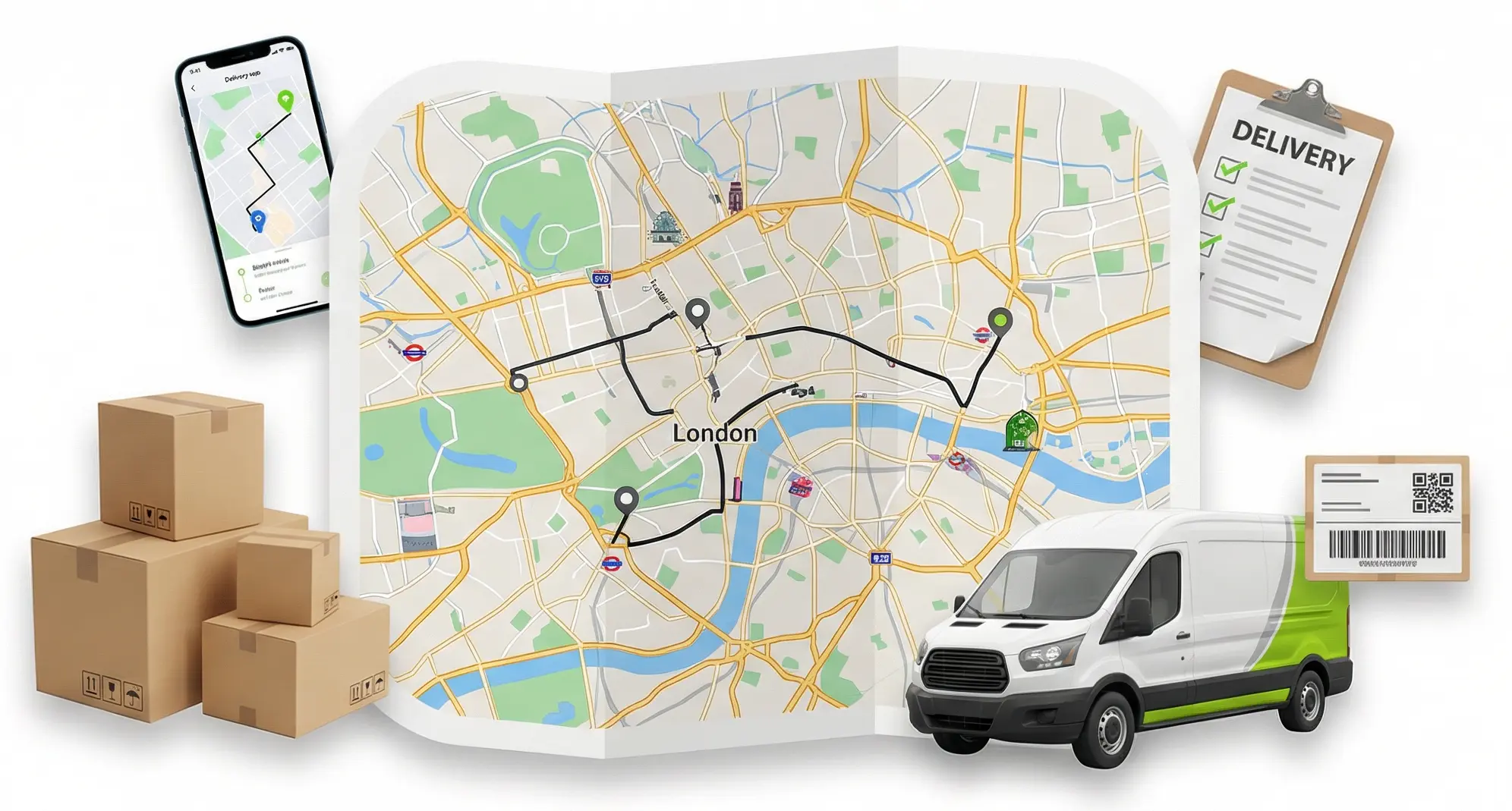

A tip run - sometimes called a tipping run, a dump run or a trip to the tip - is simply the job of loading your own rubbish and driving it to a local recycling centre to dispose of it legally. For most London households the tip is free to use for ordinary household waste, so a tip run costs you nothing but your time, fuel and a bit of muscle. The catch in 2026 is that the rules around who can use the tip, what vehicle they arrive in and what they can drop off have tightened considerably.
Searching "rubbish tip near me" or "recycling centre London" will show you a site within a few miles wherever you are in the capital. But turn up in the wrong vehicle, without the right ID, or with the wrong type of waste, and you can be turned away at the barrier. This guide explains exactly how London's Household Reuse and Recycling Centres work, the van and trailer permit schemes run by West London councils, and how to decide whether a DIY tip run or a paid rubbish removal service is the smarter call.
What Exactly Is a Tip Run - and Is It Free?
The official name for a "tip" in England is a Household Waste Recycling Centre (HWRC) or, as many London authorities now brand them, a Household Reuse and Recycling Centre (HRRC). These are council-funded sites where residents can drop off the waste and recycling that does not fit in their kerbside bins - broken furniture, garden waste, rubble, wood, scrap metal, electricals and more.
For genuine household waste brought by a resident in a car, using the tip is free. That is the core of the deal: your council tax already pays for it. Where costs and restrictions creep in is around three things - the vehicle you arrive in, certain chargeable "non-household" wastes such as building rubble, tyres and plasterboard, and whether you can prove you live locally. Get those three right and a tip run is one of the cheapest ways to clear waste in London.
The "reuse" part matters
Many London centres now have a reuse shop or container. Furniture, tools, books and bric-a-brac in usable condition are taken for resale or donation rather than crushed - so if your items still have life in them, ask staff before you throw them in the general skip.
How Do I Find My Nearest Rubbish Tip in London?
London's tips are run either by an individual borough or by a shared waste authority covering several boroughs. In West London, where we are based in Uxbridge, the West London Waste Authority (WLWA) runs centres serving the boroughs of Ealing, Harrow, Hillingdon, Hounslow and Richmond. Elsewhere the East London Waste Authority, the Western Riverside Waste Authority and individual boroughs run their own sites.
The single most important rule to understand: you must use a centre run by your own borough or waste authority. A Harrow resident cannot simply drive to a Hillingdon site because it is closer - both are West London Waste centres, so that works, but crossing into a different authority's area without being one of its residents will usually get you turned away. Always check your council's website for the correct site, opening hours and any booking requirement before you set off.
| West London area | Run by | Van visit rule |
|---|---|---|
| Hillingdon | West London Waste | 2 IDs; up to 12 van visits/year |
| Ealing | West London Waste | Booking + proof of residency |
| Harrow | West London Waste | Book a slot up to 14 days ahead |
| Hounslow / Richmond | West London Waste | Booking + proof of residency |
Rules are current for 2026 but councils change them - always confirm on your own borough's website before travelling.
Do I Need a Permit to Take a Van or Trailer to the Tip?
This is where most DIY tip runs come unstuck. Recycling centres are funded to take household waste, not trade waste, and traders historically abused vans to dump commercial rubbish for free. To stop that, almost every London authority now restricts van, pick-up and trailer access. In practice that means one or more of the following: a booked time slot, a limit on the number of van visits per year, and a rule that the van must not be sign-written or used for business.
At Hillingdon's centres, residents visiting in a van need two forms of ID (photo ID plus a household bill dated within the last 3 months) and are capped at a maximum of 12 van visits per calendar year. Harrow requires you to book a time slot online up to 14 days in advance and to show the booking confirmation, your ID and proof of residency at the gate. If you have hired the van, bring the hire agreement too - staff need to see the vehicle is not a trade vehicle.
Turn up wrong and you'll be turned away
No booking on a booking-required day, an unbooked van, or a used-up annual van quota all mean a wasted journey - and you drive home with the rubbish still in the back. When a load is genuinely van-sized, it is often the point at which a paid waste removal run starts to make sense.
Before booking a waste collection: ask us to identify the registered carrier handling the job and provide the registration details. Verify those details on the Environment Agency public register before handing over any waste.
What Proof of Residency Do London Tips Require?
Every London recycling centre needs to see that you live in the borough or waste-authority area it serves. The standard 2026 requirement is two documents: one photo ID and one recent bill in your name showing your address. For West London Waste centres that typically means a photo driving licence or passport, plus a council tax, utility or similar bill dated within roughly the last three to four months.
Usually accepted
- Photo driving licence (correct address)
- Council tax bill (last 3-4 months)
- Recent utility or water bill
- Booking confirmation, where required
Often rejected
- A bill older than a few months
- ID with a previous address
- Someone else's paperwork
- A sign-written / trade vehicle
What Can and Can't You Take to a London Tip?
Household recycling centres accept a wide spread of materials, but some wastes are either banned, capped by quantity, or chargeable because they count as "non-household" waste. Here is the broad picture for London in 2026 - always check your specific site, as acceptance varies.
| Accepted free | Often chargeable / capped | Usually not accepted |
|---|---|---|
| General household waste | Rubble, soil & hardcore | Business / trade waste |
| Garden waste, wood | Plasterboard | Chemicals & asbestos |
| Cardboard, glass, cans | Tyres | Clinical / medical waste |
| Scrap metal, electricals (WEEE), batteries | Bagged DIY / construction waste | Gas bottles (site-dependent) |
Fridges, freezers, TVs and other electricals fall under WEEE (Waste Electrical and Electronic Equipment) rules and are taken at a dedicated bay so they can be de-gassed and stripped safely. Scrap metal is accepted free at the tip too - though if you have a serious quantity, our guide to scrap metal collection in London explains when it is worth having it collected instead.
When Does Paying for a Tip Run Beat Doing It Yourself?
A DIY tip run is genuinely free for a car-boot load of household waste - that is unbeatable value. It stops making sense the moment the load is too big for your car, you do not own or want to hire a van, you have used up your annual van quota, or the job is heavy, awkward or urgent. Here is an honest comparison for a typical van-sized clear-out in London.
| DIY tip run | Man-and-van collection | |
|---|---|---|
| Cost (car-boot load) | Free | From ~£85 |
| Van-sized load | Van hire + permit + fuel + your time | All-in, loaded for you |
| Loading & lifting | You do it | We do it |
| Permit / booking hassle | Your problem | None |
| Disposal paperwork | n/a | Duty-of-care transfer note |
In plain terms: for a small car-load, do the tip run yourself. For a van-load - a bedroom clear-out, a garage full of junk, garden waste after a big tidy, or a pile of broken furniture - a load-and-go man with a van service usually works out cheaper than hiring a van yourself once you add up van rental, the permit faff, fuel, and a Saturday of your own labour. We also handle house clearance, garden waste removal and single items such as a sofa disposal.
Whatever You Do, Don't Break Your Duty of Care
Under the household duty of care in section 34 of the Environmental Protection Act 1990, you are legally responsible for what happens to your waste - even after it leaves your hands. If you pay a "man with a van" you found on social media to take it away and he fly-tips it down a country lane, and it is traced back to you, you can be fined. In 2026 the Government increased the household duty-of-care fixed penalty notice from £400 to £600, and cases can escalate to court, where fines are effectively unlimited.
The protection is simple: only ever hand waste to someone registered as a waste carrier with the Environment Agency, and get a waste transfer note or receipt showing where it went. If you take the tip-run route yourself, you are covered automatically - the recycling centre is a licensed disposal point. If you pay someone, ask for their carrier details before they load a single bag.
How Van Thats Quick handles it
Before booking a waste collection: ask us to identify the registered carrier handling the job and provide the registration details. Verify those details on the Environment Agency public register before handing over any waste.
Book a Tip Run You Don't Have to Drive
Based in Uxbridge and covering all of West London and beyond, we load, drive and legally dispose of your rubbish so you never have to queue at the barrier. Typical man-and-van rubbish collections start from around £95 and single-item disposals from a similar point.
- We load it - no lifting for you
- No permit, no booking slot, no van hire
- Licensed disposal with a duty-of-care note
- Same-day slots often available
Frequently Asked Questions
Is it free to take rubbish to the tip in London?
Yes - genuine household waste brought by a resident in a car is free at London recycling centres, because your council tax funds them. You may be charged for certain non-household wastes such as rubble, soil, plasterboard and tyres, and you must prove you live in the borough.
Do I need to book a slot at a London recycling centre?
Many do. Harrow, for example, requires an online booking up to 14 days ahead, and several West London Waste sites need bookings for van visits or at weekends. Always check your borough's website - some sites allow car visits without booking on weekdays but require it Friday to Sunday.
Can I take a van or trailer to the tip?
Usually only with a permit or booking, and within a yearly limit. Hillingdon caps residents at up to 12 van visits per year and asks for two forms of ID. Sign-written or trade vehicles are refused. If you hire a van, bring the hire agreement.
What ID do I need to bring?
Typically one photo ID (such as a driving licence or passport) plus a household bill - council tax, utility or water - dated within the last three to four months and showing your current address in the borough.
Can a man-and-van service dispose of my rubbish at the tip for free?
No. Once a business carries your waste it becomes commercial waste, which household recycling centres will not take for free. Licensed carriers pay to tip at commercial transfer stations - that disposal cost is built into a collection price. What you gain is no loading, no van hire and a legal duty-of-care note.
How much does a man-and-van tip run cost in London?
In London, a man-and-van rubbish collection typically starts from around £95 for a small load and is priced by volume and access. It covers loading, transport and licensed disposal. For a like-for-like comparison with a move-style hourly job, see our man and van cost guide.
Am I liable if a cheap clearance service fly-tips my waste?
Yes. Under your household duty of care you can face a fixed penalty of up to £600 in 2026, or an unlimited fine in court, if waste traced to you is dumped illegally. Only use a registered waste carrier and keep a transfer note or receipt.
Rather Skip the Queue?
Ask us for the current insurance certificate, cover limits and exclusions that apply to your job before you book.