
Nobody moves house with exactly the same amount of stuff they arrived with. A move is the one moment you're forced to touch every item you own — which makes it the perfect time to get rid of what you don't. Treating the move and the clear-out as two separate jobs is how people end up paying twice, blowing a weekend, and losing part of their deposit to a landlord's "removal of items" charge.
This guide is about doing both at once. Whether it's a straightforward home move, an end-of-tenancy exit, or a student clearing halls at the end of term, the same principle applies: declutter first, then move what's left and clear what isn't in a single run. A flexible removals team can carry your keepers to the new place and drop the rejects at a licensed facility on the same trip.
Why combine your removals and clearance?
Because the van is already there, the crew is already lifting, and the disposal is already part of what they do. Splitting it into two bookings means two callout windows, two lots of travel, and two invoices. Combining saves money, time and a second wasted afternoon.
| Approach | Typical London Cost | Hassle |
|---|---|---|
| Mover + separate rubbish firm | £250–£500 | Two bookings, two days |
| One team, move + clearance run | £180–£380 | One booking, one day |
| DIY hire van + tip runs | £80–£200 + your time | All the lifting is yours |
Figures are typical London ranges for a studio-to-two-bed move, not a fixed quote. Volume of clearance and access are the biggest variables.
There's an environmental case too. When a move and a clear-out are rushed and separate, the default becomes "bin everything" — the fastest option under time pressure. Plan them together and you create room to donate, resell and recycle, which is both greener and cheaper, because usable items don't take up van space you're paying for. The same crew that carries your sofa to the new flat can drop a working bookshelf at a charity on the way, and only the genuinely broken bits go for disposal.
Can leaving items behind cost you your deposit?
Yes — and it's one of the most common avoidable deductions. Standard assured shorthold tenancy agreements require you to return the property clear of your belongings and rubbish. If you leave a broken wardrobe, a mattress or a pile of bin bags, the landlord or letting agent can charge you the reasonable cost of removing them and deduct it from your deposit.
In London, that "removal of items" charge often lands at £60–£150 for a few bulky items — sometimes more if it's a big clear-out — and it comes with an admin premium because you're not there to negotiate it. Since your deposit is protected in a government-approved scheme, you could dispute an excessive charge, but the easier win is simply not to leave anything behind.
The deposit maths
Booking a small rubbish removal to take your unwanted items on move day typically costs less than the deduction a landlord would apply — and you keep control of what happens to your things (donation, resale, recycling) rather than leaving it to chance.
Two things protect you at check-out. First, your deposit must by law be held in one of the three government-approved tenancy deposit schemes, and any dispute over deductions can be escalated to that scheme's free adjudication service — so keep every receipt. Second, evidence wins arguments: photograph each room once it's completely empty, note the meter readings, and compare the state of the property against your original check-in inventory. If you cleared and cleaned the flat and can prove it, a "removal of items" charge has nothing to stand on.
The common trap is the last-day panic. People leave the big, awkward items — the wardrobe that won't come apart, the mattress, the desk — until the final hour, then run out of time and simply abandon them. Booking your clearance for the same slot as your move removes that risk entirely: the crew takes the awkward items as part of the job, and you hand back an empty property on schedule.
What should you clear versus move?
The golden rule: don't pay to transport anything you'll throw away within a month of arriving. Moving something costs van space; it's often cheaper to replace a tired item than to haul it across London. Use this quick sort:
Take it
- Anything you've used in the last year
- Solid, good-condition furniture that fits the new place
- Sentimental and irreplaceable items
- Appliances in working order
Clear it
- Broken or badly worn furniture
- Duplicates and "might need it someday" clutter
- Anything that won't fit the new layout
- Old mattresses (hygiene and bulk)
For the "clear it" pile, sort once more into donate (charity or the Reuse Network), resell (marketplace pickups a van can handle), and dispose. Usable furniture in good condition should be donated or sold rather than binned — it's greener and it lightens the load you pay to remove. Only genuinely broken items need to go for disposal.
One measurement saves a lot of grief: before you commit to moving a big piece, check it actually fits the new place — not just the room, but the route in. London's older flats and Victorian conversions are full of narrow hallways, tight staircase turns and doorways a wardrobe simply won't pass. If a bulky item can't physically get into the new property, it belongs in the "clear it" pile no matter how good it is, because you'll only pay to carry it there and straight back out again.
How do student move-outs work in London?
Student move-outs are their own special chaos: an entire house-share leaving on the same weekend, cheap furniture nobody wants to keep, and a deposit everyone wants back. End of term and end of the academic year (June to September) are the busiest windows in London, so book early.
The move-out logic is the same as any tenancy, just amplified. Shared houses accumulate a mountain of low-value stuff — desk chairs, mini fridges, drying racks, kitchenware — that isn't worth transporting but will absolutely trigger a "removal of items" deduction if left. A single student removals booking that takes each housemate's keepers and clears the communal junk in one visit is far cheaper split between four or five people than everyone booking separately.
Student move-out tips
- Split one booking between housemates to share the cost
- Donate usable furniture to charity rather than dumping it
- Photograph the cleared property for your deposit evidence
- Book before the end-of-June rush — slots fill fast
For a full walkthrough of student logistics — halls rules, term dates and cheap options — see our student moving guide for London.
Your moving-out timeline checklist
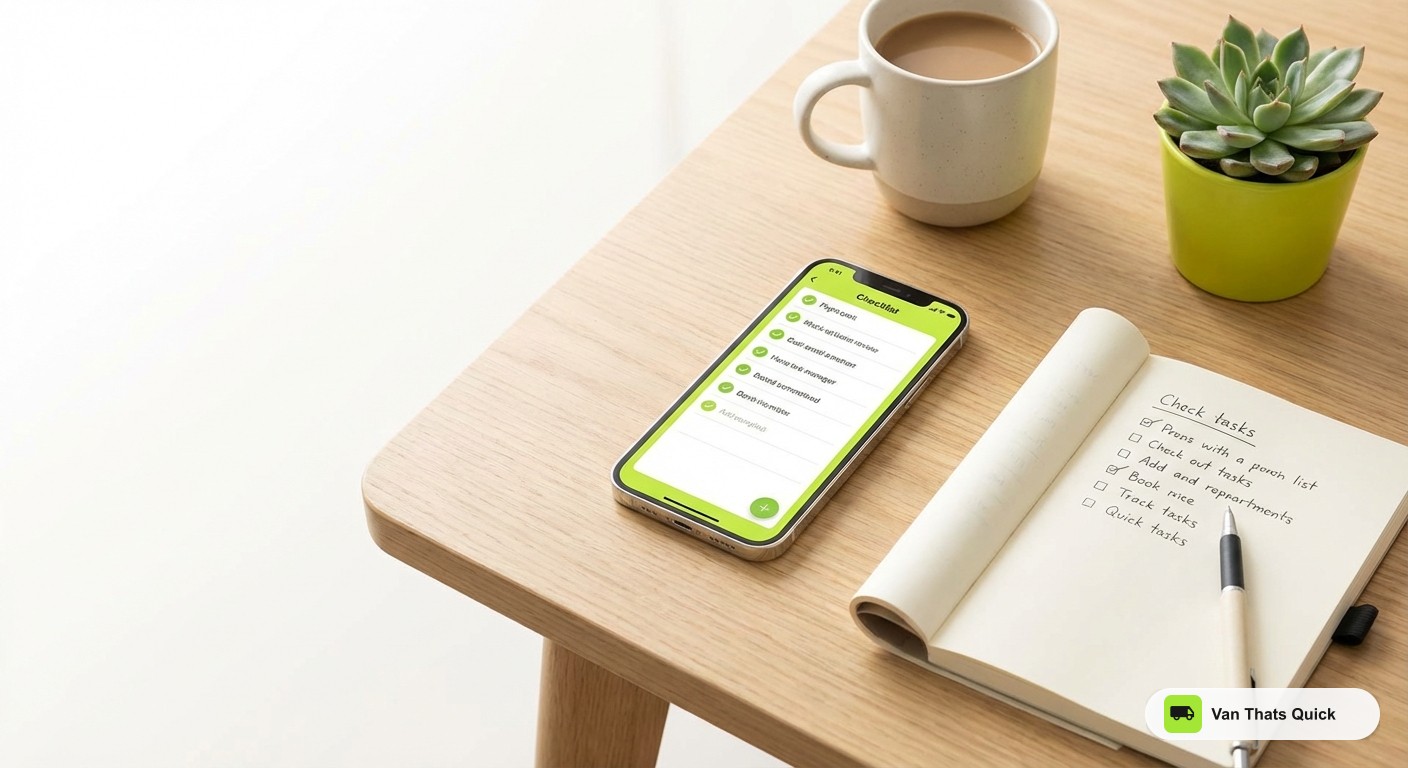
A tidy move-out is a planned one. Here's a working countdown for a London tenancy exit:
wk
Give notice & start decluttering
Confirm your move-out date in writing, dig out your inventory/check-in report, and start the keep/clear sort room by room. Book your house removals and clearance now for the best slots.
wk
Donate, sell and pack
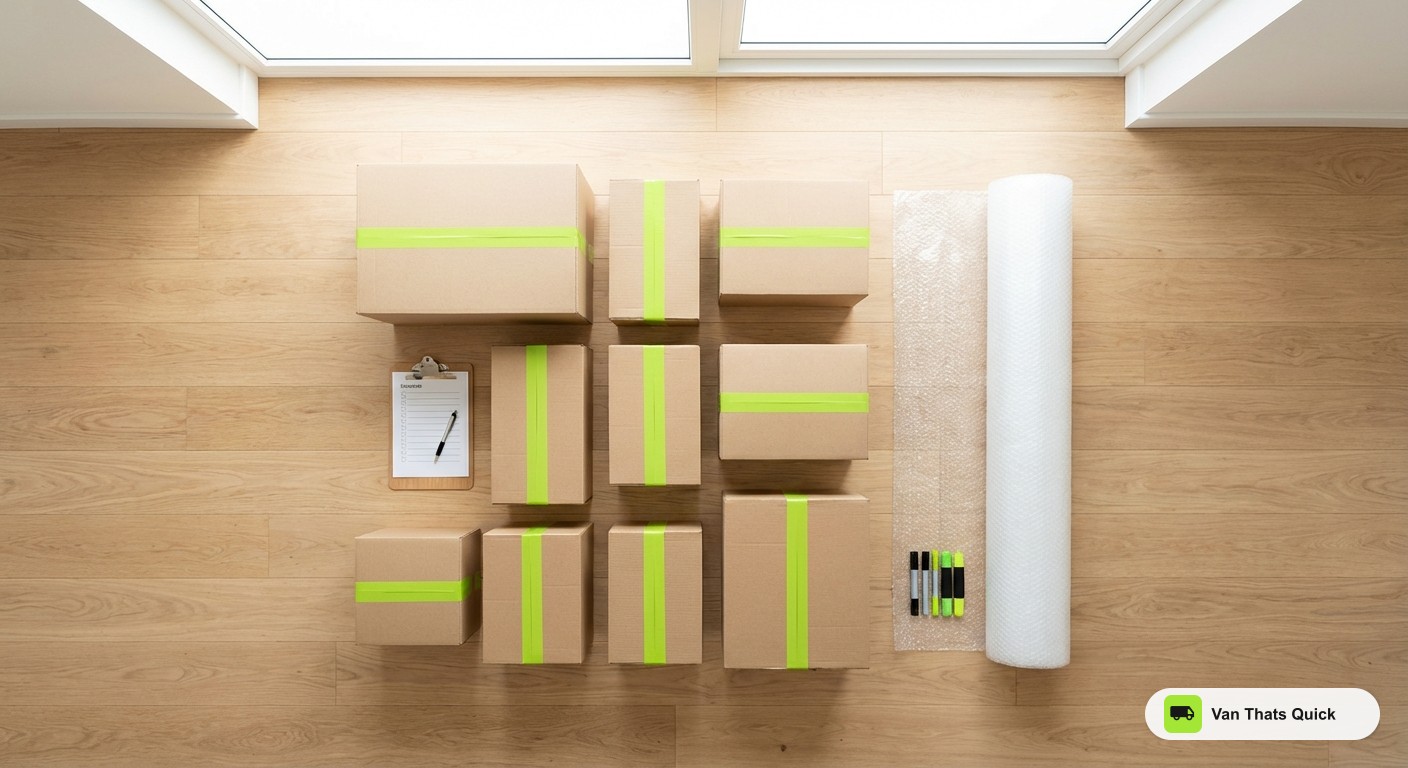
List resale items, arrange charity donations, and start boxing the keepers. Label boxes by room. Redirect post and update your address.
day
Final clear & clean
Everything in the "clear" pile ready by the door. Book the end-of-tenancy clean. Take meter readings and photos of every room once emptied.
day
Move + clear in one run
Keepers to the new address, unwanted items dropped for donation, resale collection or licensed disposal. Hand back keys with the property empty and photographed.
How to book the move and clearance as one job
When you get in touch, describe both halves: roughly how much you're moving (studio, one-bed, house-share) and roughly how much you're clearing (a couple of items, or a van's worth). That lets us send the right van and crew, and price it as a single combined run rather than two visits.
Before booking a waste collection: ask us to identify the registered carrier handling the job and provide the registration details. Verify those details on the Environment Agency public register before handing over any waste.
One team, deposit-safe
Move-out done in a single visit: your things to the new place, the rest cleared and disposed of legally, and the property handed back empty. For bigger jobs we also offer a full end of tenancy clearance.
Before booking: ask us to identify the registered carrier handling the collection and verify the registration on the Environment Agency public register.Frequently Asked Questions
Can I move house and clear rubbish in the same booking?
Yes. A man-and-van team can move your belongings to the new address and take your unwanted items away in the same run — usually cheaper than booking removals and a rubbish collection separately. In London, a combined one-bed move and clearance typically costs £180–£380.
Will I lose my deposit if I leave furniture behind?
You can. Most tenancy agreements require the property to be returned clear of your belongings, so a landlord can deduct the cost of removing anything left behind — often £60–£150 for a few bulky items in London. Clearing it yourself on move day almost always works out cheaper.
What should I do with furniture I don't want to move?
Donate good-condition pieces to charity or the Reuse Network, resell items with value, and only send genuinely broken furniture for disposal. A clearance run can handle all three routes in one visit.
When should students book their move-out?
As early as possible — the end-of-June and September windows are the busiest in London. Splitting one student removals booking between housemates keeps the cost down and clears the shared junk in a single visit.
Do you dispose of the cleared items legally?
Before booking a waste collection: ask us to identify the registered carrier handling the job and provide the registration details. Verify those details on the Environment Agency public register before handing over any waste.
Which areas do you cover for move-outs?
Every London borough from our Uxbridge base, including Ealing, Hillingdon and Harrow, plus Hayes, Chorleywood and Reading.
Move Out the Easy Way
Tell us what you're moving and what you're clearing, and we'll quote it as one honest, all-inclusive job. Deposit-safe and done in a day.