One Week Before
Final preparations begin
Confirm your booking
Call your man and van to double-check the date, time, addresses (both pickup and delivery), and any additional services. Get a written confirmation if you don't already have one.
Arrange parking permits
Most London councils need 5-10 working days notice for parking bay suspensions. Apply for BOTH addresses if needed. Costs £30-80 per location depending on the borough.
Pack non-essentials
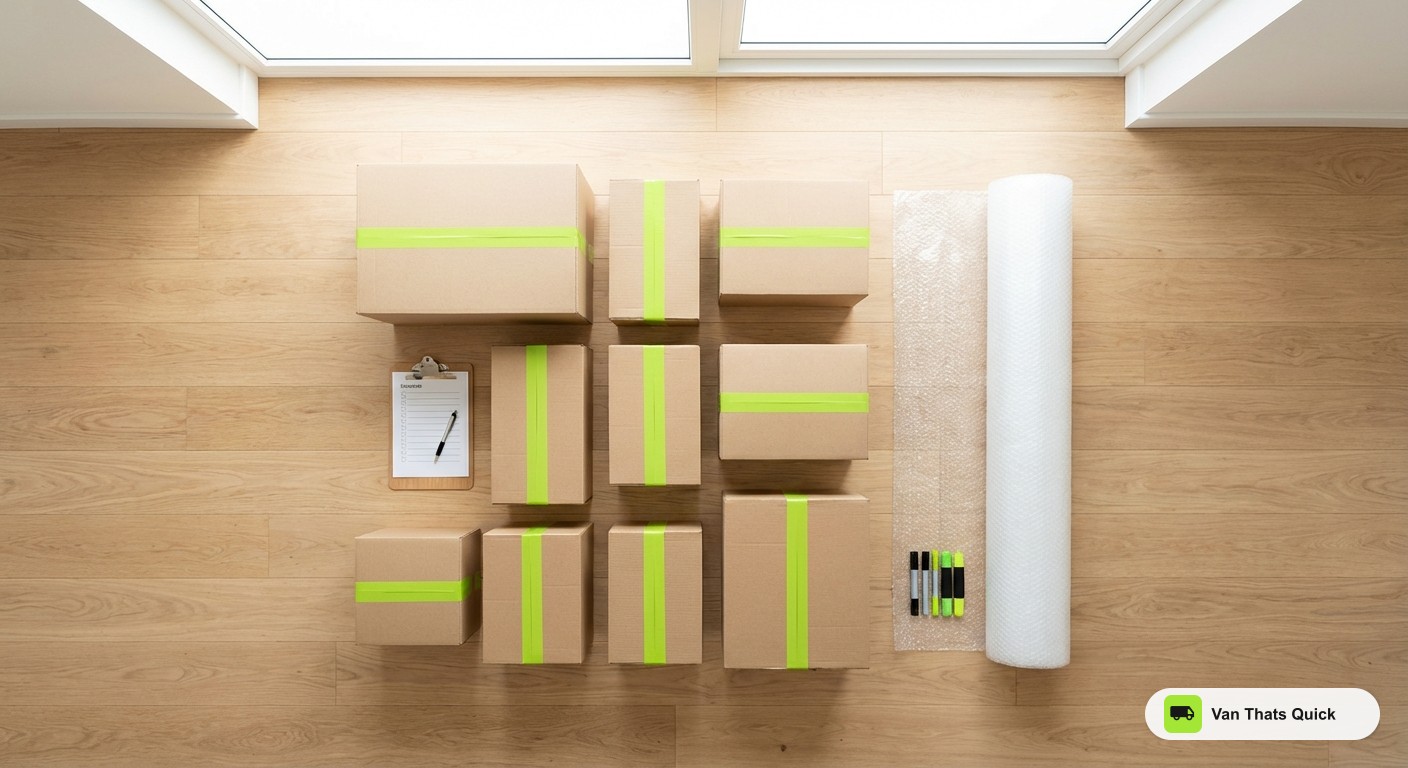
Start boxing up things you won't need this week: books, ornaments, out-of-season clothes, spare bedding, decorations. Label boxes clearly on the SIDE (not top) so you can read them when stacked.
Notify utilities and services
Contact gas, electricity, water, broadband, and council tax. Set up services at your new address and arrange final bills at your old address. Schedule broadband installation for moving day if possible.
Gather important documents
Collect passports, birth certificates, contracts, insurance documents, medical records, and valuables into one secure folder or box that stays with YOU - never on the van.
Set up mail redirection
Visit the Royal Mail website or Post Office. Mail redirection costs from £36.99 for 3 months. Do this early to ensure nothing important goes astray.
Three Days Before
Serious prep time
Defrost the freezer
Unplug your fridge/freezer and leave doors open. Put towels underneath to catch water. 24-48 hours ensures it's completely defrosted and won't leak in the van.
Disassemble furniture
Take apart beds, wardrobes, and desks. Keep screws and bolts in labelled ziplock bags taped to the furniture piece. Take photos of any complex assemblies before dismantling.
Photograph electronics wiring
Before unplugging your TV, computer, speakers, or gaming setup, take photos of all the cables and connections. You'll thank yourself when reassembling at the new place.
Use up perishables
Start eating through fridge and freezer contents. Move frozen items to a cool bag with ice packs on moving day, or give them to neighbours.
Pack your survival box
Assemble everything you'll need immediately at your new home. See our detailed survival box checklist below. This stays with you, not on the van.
Confirm access at new property
Double-check you can collect keys on moving day and know exactly when. Confirm there are no issues with the previous occupants leaving on time.
The Night Before
Final touches
Finish packing everything
Pack everything except what you need tonight and tomorrow morning. Don't leave packing for moving day - you'll be too busy and stressed.
Charge all devices
Phone, tablet, laptop, portable chargers - everything. You'll need your phone for communication, directions, and coordinating with movers.
Get cash out
£50-100 in cash for tips, parking meters, or emergencies. Not all situations accept card payments, especially corner shops near your new place.
Check the weather
If rain is forecast, prepare cardboard sheets for floor protection and plastic covers for furniture going in/out of the van.
Set multiple alarms
Tomorrow is NOT the day to oversleep. Set at least two alarms and go to bed at a reasonable time. Aim to be up 2 hours before movers arrive.
Prepare drinks and snacks
Buy tea, coffee, biscuits, and water for moving day. Offering movers a cup of tea goes a long way, and you'll need sustenance too.
Moving Day Morning
Before the movers arrive
Eat a proper breakfast
Moving day is physically and mentally demanding. Don't skip breakfast - you need the energy. Something substantial that will keep you going.
Strip the beds
Remove all bedding and pack it in large bin bags - quick to carry and protects it from dirt. The mattress goes on the van last (off first at new place).
Pack remaining items
Toiletries, towels, and anything you used this morning. Have a "last box" ready for these final items.
Do a final property sweep
Check EVERYWHERE: all cupboards, loft, shed, garage, garden. Behind doors, under beds, inside appliances. It's easy to miss things when stressed.
Clear pathways
Make sure hallways, doorways, and paths to the van are completely clear. Move boxes to staging areas so movers can work efficiently.
Protect floors if wet
If it's raining, lay cardboard or old towels along the route movers will use. Protects both your floors and the deposit if renting.
Take meter readings
Photograph gas, electricity, and water meters before you leave. You'll need these for final bills. Do the same at your new property on arrival.
During the Move
When your movers arrive
First Things First: The Walkthrough
When movers arrive, walk them through the property and point out:
- Fragile items that need extra care (mirrors, TVs, artwork)
- Heavy items like washing machines, pianos, or safes
- Items for last loading (needed first at new place - beds, kettle box)
- Items NOT going (so they don't accidentally get loaded)
- Access issues at the new property (stairs, narrow doors, parking)
Offer refreshments
Tea, coffee, water, biscuits. Happy movers work better and take more care with your stuff. It's also just good manners.
Stay available but don't hover
Be around to answer questions but let professionals do their job. Hovering slows things down. Check in periodically rather than watching constantly.
Keep kids and pets safe
With doors open and heavy items moving, it's dangerous for children and pets. Arrange for them to stay with family/friends, or keep them in one safe room away from the action.
Final check before leaving
Do one last walkthrough after everything is loaded. Check all rooms, cupboards, loft, and garden. Lock all windows and doors. Leave keys as arranged.
At Your New Home
Settling in
Check the property first
Before unloading begins, do a quick inspection. Check for any damage, that agreed repairs are done, all keys work, and utilities are on. Take photos of anything concerning.
Take meter readings
Photograph gas, electricity, and water meters immediately. Report to your suppliers right away so you don't pay for the previous occupant's usage.
Direct the unloading
Tell movers which room each item/box goes to. Stand at the door and point - "bedroom left, living room right." This saves hours of reorganising later.
Get beds set up first
Prioritise assembling beds and making them with your survival box bedding. After an exhausting day, the last thing you want is to build furniture before collapsing.
Set up the bathroom
Unpack towels, toilet roll, hand soap, and basic toiletries. A functional bathroom makes everything else more bearable.
Test essential appliances
Check the fridge, oven, and washing machine work. Run taps to check hot water. If renting, report any issues to the landlord immediately.
Find local essentials
Locate the nearest supermarket, pharmacy, and cash machine. A quick walk around the neighbourhood also helps you start to feel at home.
Don't try to unpack everything
Focus on essentials today. You've got days and weeks to fully unpack. Trying to do everything at once leads to exhaustion and frustration.
Your Moving Day Survival Box
This box contains everything you need for the first 24 hours. Keep it with you - don't let it go on the van. You'll need access to these items immediately.
Kitchen
- Kettle
- Mugs (2-4)
- Tea, coffee, sugar, milk
- Bottled water
- Snacks (biscuits, cereal bars)
- Basic cutlery
- Plates or bowls
- Kitchen roll
- Washing up liquid
Bathroom
- Toilet roll (several rolls)
- Hand soap
- Towels (bath + hand)
- Toothbrush + toothpaste
- Shampoo + shower gel
- Deodorant
- Any medications
- First aid basics
Bedroom
- Bedding (sheets, duvet, pillows)
- Pyjamas / sleepwear
- Change of clothes for tomorrow
- Phone charger
- Alarm clock / phone
Tools & Essentials
- Screwdriver (flat + Phillips)
- Scissors
- Stanley knife / box cutter
- Packing tape
- Marker pen
- Bin bags
- Cleaning spray + cloths
- Torch (in case of power issues)
- Important documents folder
- Cash
If You Have Pets
- Pet food + bowls
- Water bowl
- Lead / carrier
- Litter tray + litter (cats)
- Favourite toy or blanket (comfort)
- Any medications
London-Specific Preparation
Parking Bay Suspensions
Most London councils require 5-10 working days notice. Typical costs:
- Westminster: £52/day
- Camden: £75/day
- Islington: £46/day
- Hackney: £35/day
Apply for both addresses if either has permit parking. Without this, movers may have to park far away - adding time and cost.
Timing Around Traffic
London traffic can add hours to your move. Best strategies:
- Start early: 7-8am start avoids morning rush
- Avoid school run: 8:30-9:30am and 3-4pm are worst
- Mid-week is better: Tuesday-Thursday has less traffic than Monday/Friday
- Avoid bank holidays: Residential parking is chaos
Flat Access Considerations
If you're moving to/from a flat:
- Book the lift: Many buildings require advance booking for moving
- Notify management: Some need 48 hours notice for access
- Check dimensions: Will your sofa fit in the lift? Measure in advance
- Protect common areas: You may need to cover floors/walls
ULEZ & Congestion Charge
Check your movers use ULEZ-compliant vehicles to avoid £12.50/day ULEZ charge plus £15/day Congestion Charge. Most professional man and van services (like us) have compliant vehicles, but always confirm when booking.
10 Common Moving Day Mistakes
Leaving packing until moving day
You'll be rushed, stressed, and things will get damaged. Pack everything the night before at minimum.
Not arranging parking
If movers can't park nearby, they'll charge for the extra time walking back and forth. Suspend a bay in advance.
Forgetting to defrost the freezer
A freezer that's still frosted will leak water all over your other belongings in the van.
Overpacking boxes
Heavy boxes are dangerous and damage easily. Use smaller boxes for books and heavy items, big boxes for light things.
Not labelling boxes properly
Write the room AND contents on the side of each box. "Kitchen - pots and pans" not just "kitchen stuff".
Putting survival box on the van
Your essentials box should stay with you, not get buried under furniture. You'll need immediate access to it.
Not taking meter readings
You could end up paying for the previous/next occupant's usage. Photograph meters at both properties.
Forgetting to check cupboards and loft
Do a final sweep of EVERYWHERE before leaving. Items are commonly left in lofts, under-stair cupboards, and sheds.
Not checking the new property first
Before unloading, check for any damage or issues. It's hard to prove problems later once your stuff is everywhere.
Trying to unpack everything on day one
You'll exhaust yourself. Focus on essentials - beds, bathroom, basic kitchen. Everything else can wait.
Frequently Asked Questions
What should I pack in my moving day survival box?
Your survival box should include: kettle, mugs, tea/coffee, toilet roll, hand soap, towels, phone chargers, basic toiletries, medications, snacks, bottled water, important documents, a change of clothes, bin bags, cleaning supplies, tools (screwdriver, scissors, tape), and pet supplies if applicable. Keep this box with you - don't load it on the van.
How early should I wake up on moving day?
Wake up at least 2 hours before your movers arrive. This gives you time to shower, eat breakfast, do final packing of overnight items, strip beds, and complete a last sweep of the property. If movers arrive at 9am, be up by 7am.
What should I do when the movers arrive?
Walk them through the property, point out fragile items needing special care, show them heavy items like appliances, indicate what's NOT going, show them the route to the van, and mention any access issues at your new address. Offer them tea/water and let them work efficiently.
How long before moving day should I arrange parking in London?
Apply for parking bay suspensions at least 5-10 working days before moving day. Most London councils require 5 working days minimum notice. Costs range from £30-80 depending on the borough. Apply for both your old and new addresses if needed.
Should I tip my movers?
Tipping isn't mandatory in the UK but is appreciated for good service. £10-20 per mover is typical for a standard move, or £20-30 per person for a difficult move with lots of stairs. Alternatively, buying them lunch, snacks, and drinks throughout the day is equally appreciated.
What meter readings do I need to take on moving day?
Take gas, electricity, and water meter readings at BOTH properties on moving day. Photograph each reading with your phone for proof. Submit readings to your suppliers immediately to avoid being charged for the previous/next occupant's usage.
Ready for Moving Day?
With proper preparation, moving day can actually be enjoyable. We've helped thousands of Londoners move stress-free - from studio flats to large family homes.
At Van Thats Quick, we turn up on time, treat your belongings with care, and make the whole process as smooth as possible. Same-day bookings available.